All ten trees are listed by common name. Compare mature dimensions, then open your tree for its planting and aftercare instructions.
Plan for the mature tree. Allow room for its branches and a broad, connected area of suitable soil for its roots. Crown width is not a minimum lawn-area requirement. Site conditions and tree form affect the space needed.
01For a reliably moist site
Native · Deciduous
Ogeechee Tupelo
Nyssa ogeche
MATURE HEIGHT30–50 ft
CROWN WIDTH20–30 ft
GREEN SPACE & PLACEMENTA moist, open rooting area
Use a naturally moist lawn, rain-garden edge, or pond margin with room for spreading branches and roots. A dry, paved pocket is a poor fit.
Choose a large, open lawn or landscape area. Leave room for a massive trunk, spreading limbs, and roots beyond the crown. Avoid narrow strips between buildings and pavement or beneath overhead utilities.
GREEN SPACE & PLACEMENTAn open shade-tree location
Provide a broad soil area rather than an isolated hole between hard surfaces. A lower landscape area can suit this tree, but allow for a substantial shade-tree crown and future root spread.
Allow a large, connected rooting area and overhead clearance. In wet or heavily irrigated sites, anticipate knees and an expanding trunk base; keep that growth away from busy paths and confined mowing strips.
Allow room for a wide, multi-stemmed crown, not just its height. Keep it out of soggy depressions and away from windows or paths that would require continual hard pruning.
GREEN SPACE & PLACEMENTAn open, sunny pine location
Choose a sunny area with substantial overhead clearance and connected soil. Avoid a small foundation bed or a chronically waterlogged pocket. Its low grass-like juvenile form does not mean it will stay small.
GREEN SPACE & PLACEMENTRoom for a small tree and suckers
Use a sunny, well-drained bed or naturalized edge with room for root sprouts. Keep it clear of narrow walkways; spreading shoots, occasional thorny twigs, and fallen fruit need consideration.
GREEN SPACE & PLACEMENTA moist bed with room for a tree
Use a broad, moist planting area away from tight foundation spaces. Southern sweetbay can grow much larger than the small shrubs described for colder climates. Trunk form and eventual spread vary.
GREEN SPACE & PLACEMENTA large, protected soil area
Choose a spacious lawn or woodland-edge setting with good drainage. Avoid compacted parking areas, chronically wet depressions, and small paved cutouts. Its broad crown and shallow roots need long-term protection.
GREEN SPACE & PLACEMENTA protected woodland edge or bed
Choose moisture-retentive but draining soil with protection from harsh afternoon sun while young. Allow for a small tree and possible root suckers. Established trees can grow in sun or shade; sun generally improves fruit production.
Open your tree for its container care, planting location, first-year watering, and seasonal changes. Dimensions describe typical mature trees, not minimum yard sizes or guaranteed limits.
01Ogeechee TupeloNyssa ogecheNative · Deciduous+
Ogeechee tupelo is the tupelo on the confirmed giveaway list. It is a different species from black gum. Its simple leaves, seasonal fall color, and red fruit on female trees help distinguish it as it matures. [1]
Mature height
30–50 ft
Crown width
20–30 ft
Sunlight
Full sun to partial shade
Soil & drainage
Moist to wet, acidic soil
Green space & planting location
Use a naturally moist lawn, rain-garden edge, or pond margin with room for spreading branches and roots. A dry, paved pocket is a poor fit.
Care while still in the pot
Check the root ball every day and water before it dries out. Let the nursery pot drain freely; a tree's tolerance of wet ground is not a reason to leave its container in stagnant water.
Planting your tree
Choose the permanent location carefully because its taproot makes later moving difficult. Support the root ball, remove the pot, and plant with the first structural roots at or slightly above grade. Follow the wide-hole instructions below.
Watering & first-year aftercare
Keep the original root ball consistently moist through establishment, including dry spells in a wet-looking yard. Check both it and the surrounding soil; expand the watered area as roots grow.
What to expect through the seasons
Leaves change color and drop in fall. Leaf loss in the dormant season is not by itself a sign of death. Female trees can produce red fruit when pollinated; allow for fruit drop near paths.
Ongoing care & cautions
Maintain a broad mulch area and protect the trunk from equipment. Choose a site sheltered from harsh winds. Ask for help with persistent wilt, dieback, or a root ball that dries repeatedly.
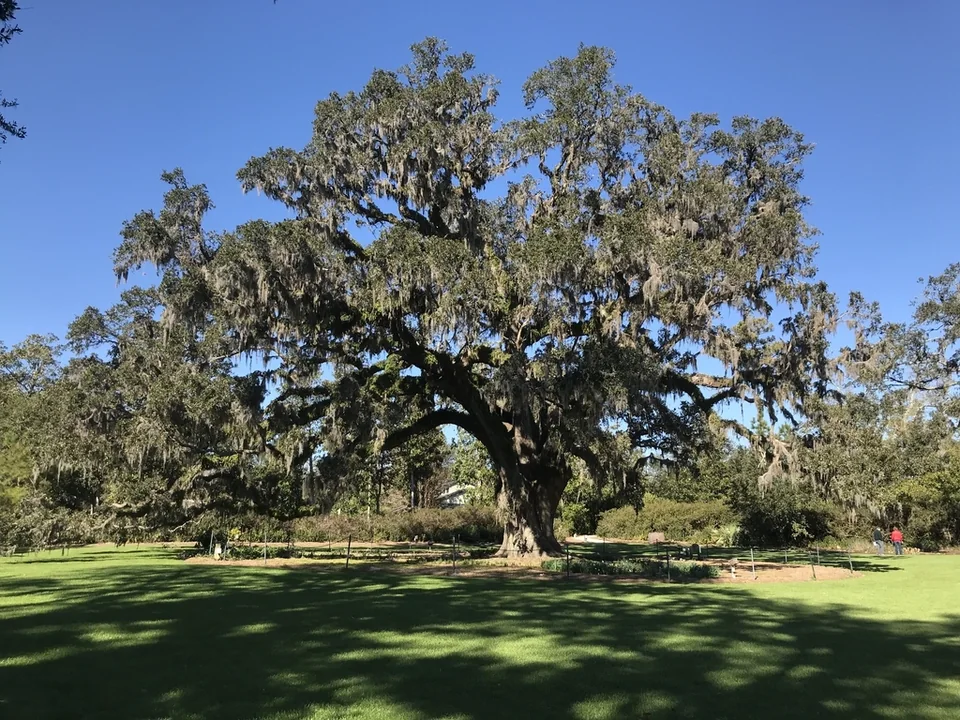
Live oak becomes a broad, long-lived shade tree. Its small, leathery leaves and spreading limbs are useful identification features. The small tree in the nursery pot is not an indication of its eventual space needs. [2]
Mature height
60–80 ft
Crown width
60–120 ft
Sunlight
Full sun to partial shade
Soil & drainage
Adaptable; favor an open, well-drained site
Green space & planting location
Choose a large, open lawn or landscape area. Leave room for a massive trunk, spreading limbs, and roots beyond the crown. Avoid narrow strips between buildings and pavement or beneath overhead utilities.
Care while still in the pot
Keep the root ball evenly moist while the tree waits outdoors in a sheltered spot. Check daily, lift by the container, and protect the leaves from strong wind during transport.
Planting your tree
Expose the root flare before measuring hole depth. Inspect for circling roots and obtain help with substantial defects. Set the root ball on firm soil and keep soil and mulch away from the trunk flare.
Watering & first-year aftercare
Water the original root ball and surrounding backfill when moisture checks show a need. Established-tree drought tolerance does not protect a newly planted live oak. Continue monitoring through its first summer and later dry spells.
What to expect through the seasons
Live oak replaces older leaves around spring growth and may briefly look thin. Some older-leaf drop is normal; widespread dieback or persistent wilt calls for an inspection rather than extra water by guesswork.
Ongoing care & cautions
Keep mowers and string trimmers outside the mulch ring. After establishment, arrange gradual structural pruning while branches are small. Do not top the tree or remove large amounts of healthy foliage to make it fit a restricted site.
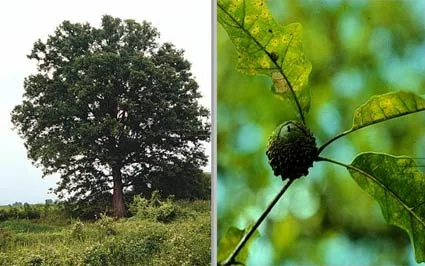
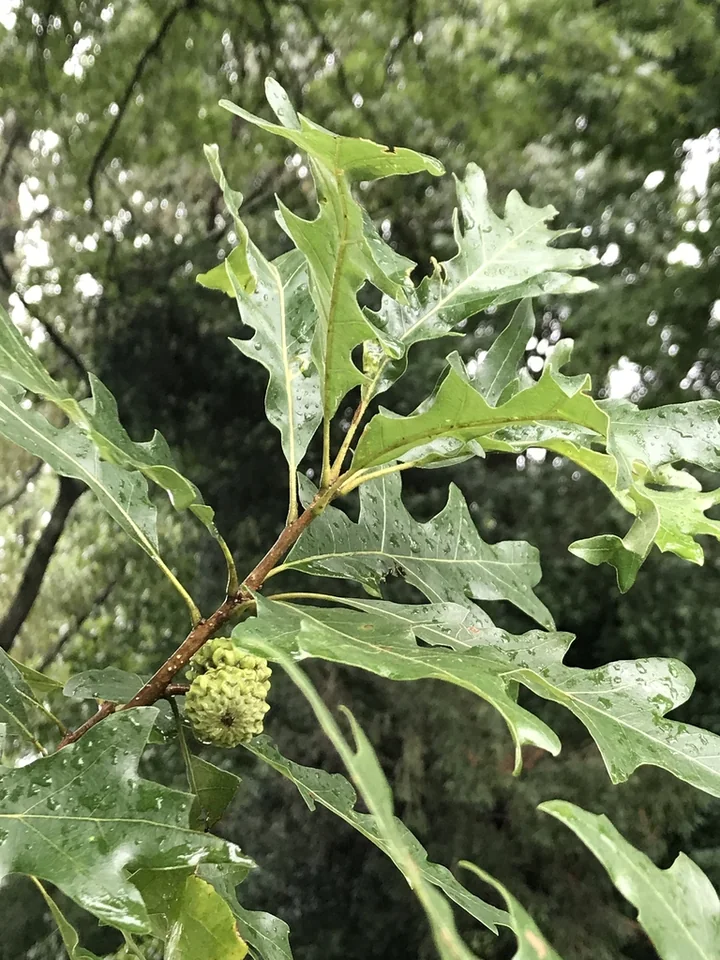
Overcup oak is a native shade tree with lobed leaves. The cup covers much of each mature acorn. Older specimens can exceed the typical landscape height shown here. [3]
Mature height
35–60 ft
Crown width
35–60 ft
Sunlight
Full sun to partial shade
Soil & drainage
Moist soil; tolerates periodic flooding
Green space & planting location
Provide a broad soil area rather than an isolated hole between hard surfaces. A lower landscape area can suit this tree, but allow for a substantial shade-tree crown and future root spread.
Care while still in the pot
Check the container daily and water when the mix begins to dry. Keep the drainage holes open. Flood tolerance in the landscape does not remove the need to manage a small nursery root ball carefully.
Planting your tree
Find the root flare and check for circling roots before planting. Use a wide, shallow hole with firm support underneath. Do not bury the trunk to compensate for a low or muddy planting location.
Watering & first-year aftercare
Keep moisture reasonably even while new roots establish. An overcup oak in a drier yard still needs supplemental water during dry periods. Do not assume wet surrounding ground means the original root ball is moist.
What to expect through the seasons
Fall color ranges from yellow and brown to red, followed by leaf drop. Some young oaks hold dry leaves into winter. Check buds and twigs before assuming a leafless tree has failed.
Ongoing care & cautions
Maintain a grass-free mulch ring and protect the bark. Address competing stems and poorly attached branches gradually after establishment. Leave healthy foliage in place during the initial planting period.
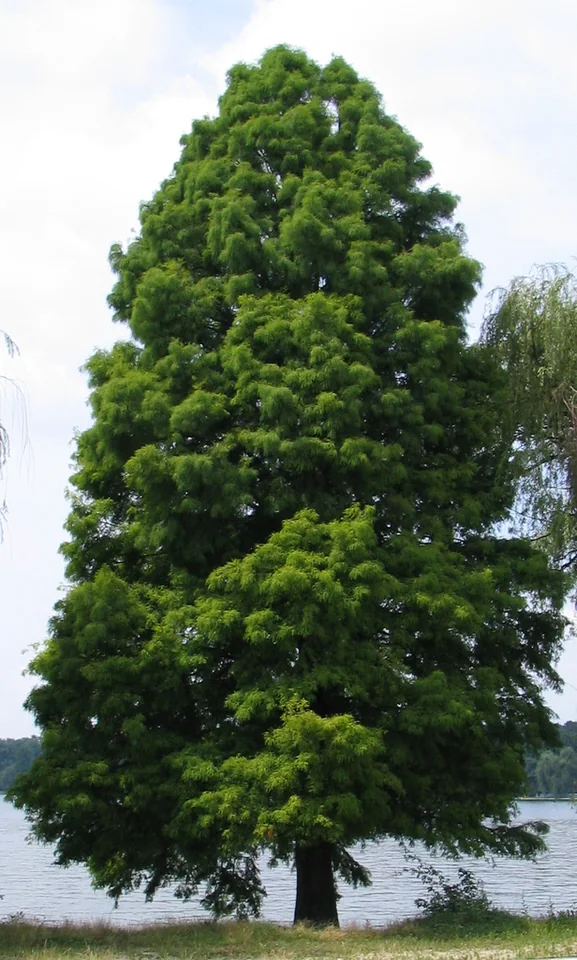
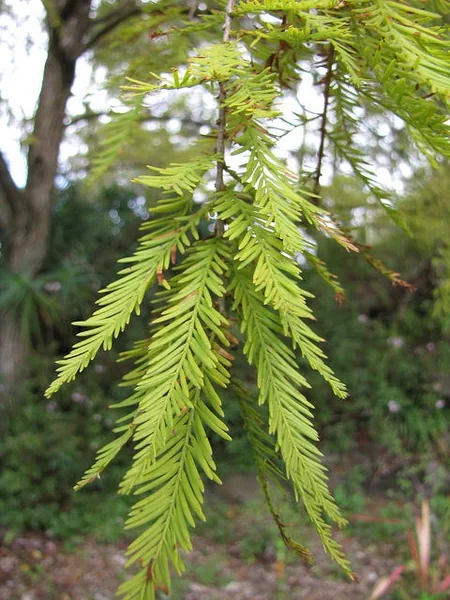
Bald cypress has soft, feathery foliage but is not evergreen. It can become taller than the typical landscape range shown here and is not limited to growing in standing water. [4]
Mature height
60–80 ft
Crown width
25–35 ft
Sunlight
Full sun
Soil & drainage
Moist to wet soil; also adapts to drained sites
Green space & planting location
Allow a large, connected rooting area and overhead clearance. In wet or heavily irrigated sites, anticipate knees and an expanding trunk base; keep that growth away from busy paths and confined mowing strips.
Care while still in the pot
Keep the root ball moist, especially in sun and wind, but let the container drain. Do not deliberately submerge the nursery pot while waiting to plant.
Planting your tree
Locate the first structural roots and keep them at or slightly above the surrounding grade. Remove the container and correct significant circling roots with appropriate help. Do not plant deeper because this is a wet-site species.
Watering & first-year aftercare
Check the original root ball frequently and maintain moisture through establishment. A newly planted bald cypress in an ordinary lawn can dry out even though mature trees tolerate varied conditions.
What to expect through the seasons
Bronze or rusty fall foliage followed by needle drop is normal. The bare winter crown should produce fresh growth in spring. Brown foliage during active growth deserves a moisture and health check.
Ongoing care & cautions
Keep the mulch broad and shallow. Plan around possible knees rather than cutting them as routine maintenance. Avoid trunk wounds and unnecessary pruning; ask for guidance if the site cannot accommodate its eventual size.
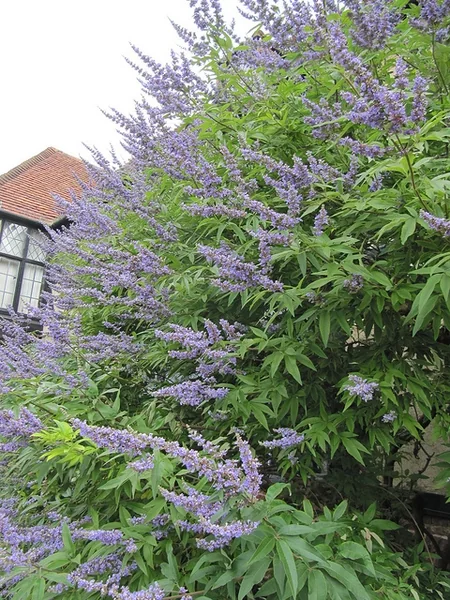
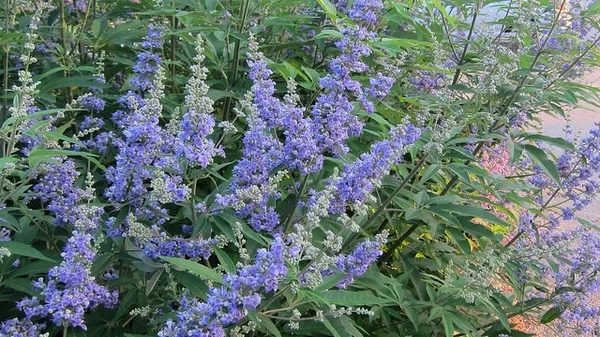
The supplied Chaste Tree is ‘Shoal Creek’. These labeled photos show other selections of the same species, not ‘Shoal Creek’; they are identification examples, not photographs of the supplied cultivar.
The supplied chaste tree is the ‘Shoal Creek’ selection, with violet-blue flower spikes. It is a large shrub or small tree, not a dwarf variety. Mature size depends on climate, site, and pruning. [5]
Mature height
10–15 ft
Crown width
15–20 ft
Sunlight
Full sun for best flowering
Soil & drainage
Well-drained soil; avoid persistent saturation
Green space & planting location
Allow room for a wide, multi-stemmed crown, not just its height. Keep it out of soggy depressions and away from windows or paths that would require continual hard pruning.
Care while still in the pot
Check moisture daily and water thoroughly when needed, allowing excess water to drain. Do not leave it in a water-filled saucer; this tree needs drainage even during container storage.
Planting your tree
Choose a sunny, well-drained location. Plant at the correct root-flare depth and backfill with site soil. Avoid adding fertilizer or heavily cutting back a newly planted tree to force immediate growth.
Watering & first-year aftercare
Water regularly enough to keep the new root ball from drying, then reduce frequency as roots establish. Drought tolerance applies to established plants, not an unrooted nursery tree. Recheck drainage if the root ball stays soggy.
What to expect through the seasons
Leaves drop in fall. Flowers develop on new growth; pruning for form, if needed after establishment, is best timed before spring growth. Routine severe cutting is not required.
Ongoing care & cautions
Retain a natural form or develop a small tree gradually. Watch for unwanted seedlings because chaste tree can spread by seed. Remove seedlings promptly rather than allowing it to spread into natural areas.
Longleaf pine has long needles, usually in bundles of three. A young tree may remain in a low ‘grass stage’ while developing roots, then begin rapid height growth. This is normal development, not a reason to replace it. [6]
Mature height
60–120 ft
Crown width
30–40 ft
Sunlight
Full sun
Soil & drainage
Well-drained, acidic soil
Green space & planting location
Choose a sunny area with substantial overhead clearance and connected soil. Avoid a small foundation bed or a chronically waterlogged pocket. Its low grass-like juvenile form does not mean it will stay small.
Care while still in the pot
Keep the root ball moist but freely draining. Support the container and protect the central bud and needles from crushing. Do not postpone planting just to wait for a taller stem.
Planting your tree
Keep the central growing bud clear of soil and mulch. For a grass-stage plant, the bud must not be buried. Set the root system at the correct original depth, support the root ball, and ask for help with badly kinked roots rather than tearing them apart.
Watering & first-year aftercare
Check moisture frequently after planting and water during dry spells without maintaining a soggy root ball. Do not use trunk-diameter watering calculations for a grass-stage plant; wet the actual root ball and check the result.
What to expect through the seasons
Slow height growth in the grass stage is normal. Older needles can shed while the growing tip remains healthy. Keep grass and weeds from overtopping the young pine.
Ongoing care & cautions
Never mow a grass-stage pine as though it were lawn grass. Keep mulch off the bud, protect the leader, and avoid topping or shearing. Do not use fire as a homeowner establishment treatment.
07Chickasaw PlumPrunus angustifoliaNative · Deciduous small tree+
Chickasaw plum is a small native tree or large shrub with white spring flowers, narrow toothed leaves, and yellow-to-red summer fruit. It often produces root suckers and can spread into a colony. [7]
Mature height
10–20 ft
Crown width
10–20 ft
Sunlight
Full sun to partial shade
Soil & drainage
Average, well-drained soil
Green space & planting location
Use a sunny, well-drained bed or naturalized edge with room for root sprouts. Keep it clear of narrow walkways; spreading shoots, occasional thorny twigs, and fallen fruit need consideration.
Care while still in the pot
Keep the mix moist, not saturated, and check it every day. Protect the container from strong wind and do not lift or drag the tree by its stems.
Planting your tree
Plant with the flare visible in a broad hole, using the existing soil as backfill. Decide whether this will be one maintained tree or a naturalized thicket so future sprouts will not conflict with nearby uses.
Watering & first-year aftercare
Water the original root ball as needed through establishment. Once rooted into the site, reduce frequency according to actual soil moisture. Avoid leaving it in persistently wet soil.
What to expect through the seasons
White blooms can appear before the leaves in spring. Yellowing and leaf loss in fall are normal. Fruit production can vary; do not expect a newly planted tree to establish and produce a crop immediately.
Ongoing care & cautions
Remove unwanted root suckers while small if you want a single tree. Watch for branch dieback, cankers, or black swellings and seek diagnosis before treatment. Do not eat plum pits, leaves, or stems; keep fallen material away from livestock.
08Sweetbay MagnoliaMagnolia virginianaNative · Evergreen to semi-evergreen locally+
Sweetbay magnolia has fragrant creamy-white flowers and leaves with pale, silvery undersides. It is not southern magnolia. The dimensions here reflect southern tree-form landscape guidance; larger specimens are possible. [8]
Mature height
40–60 ft
Crown width
15–25 ft
Sunlight
Full sun to partial shade
Soil & drainage
Moist to wet, acidic soil
Green space & planting location
Use a broad, moist planting area away from tight foundation spaces. Southern sweetbay can grow much larger than the small shrubs described for colder climates. Trunk form and eventual spread vary.
Care while still in the pot
Do not allow the root ball to dry completely. Keep it outdoors, sheltered from drying winds, and let excess irrigation drain from the pot.
Planting your tree
Support the fleshy roots and root ball while removing the pot. Expose the first structural roots gently and plant at the proper depth. Ask for help with major root defects rather than aggressively breaking up the root system.
Watering & first-year aftercare
Keep the root ball consistently moist through its first growing season. Check it even when surrounding soil feels damp. Maintain a mulch ring to moderate drying, but leave the trunk and flare clear.
What to expect through the seasons
Sweetbay may retain much of its foliage in mild Gulf Coast winters or lose more during cold conditions. Some seasonal leaf drop is normal; persistent wilt or branch death needs closer attention.
Ongoing care & cautions
Allow the natural single- or multi-trunked form unless early guidance identifies a need for structural pruning. Avoid root disturbance and soil compaction. Yellow foliage on alkaline soil warrants soil testing, not automatic fertilizer application.
American beech has smooth gray bark, pointed buds, and toothed leaves. It becomes a large shade tree, not a small ornamental. Some specimens exceed the dimensions shown. [9]
Mature height
60–80 ft
Crown width
40–80 ft
Sunlight
Sun to partial shade; shade tolerant
Soil & drainage
Moist, well-drained, acidic soil
Green space & planting location
Choose a spacious lawn or woodland-edge setting with good drainage. Avoid compacted parking areas, chronically wet depressions, and small paved cutouts. Its broad crown and shallow roots need long-term protection.
Care while still in the pot
Keep the root ball evenly moist and sheltered from harsh afternoon exposure and drying wind. Check daily, but do not leave it standing in water.
Planting your tree
Plant in its permanent location with the flare visible. Handle the root ball gently and avoid unnecessary root damage. Use site soil for backfill rather than burying the root system beneath added soil or compost.
Watering & first-year aftercare
Maintain steady moisture without waterlogging. Pay special attention during hot, dry weather and through the first summer. A broad mulch ring helps protect the surface-root area; keep it shallow and away from the bark.
What to expect through the seasons
Leaves turn bronze or copper in fall, and young beeches may hold dry leaves through winter. Retained brown leaves alone do not mean the tree is dead.
Ongoing care & cautions
Keep foot traffic, vehicles, trenching, and soil fill away from its roots. Protect its thin bark from mowers and string trimmers. Avoid unnecessary pruning; unusual leaf changes, progressive thinning, or dieback warrant professional assessment.
Pawpaw has large, drooping leaves, dark maroon spring flowers, and custard-like fruit when mature. A recently planted tree should be managed for root establishment, not immediate fruit production. [10]
Mature height
15–30 ft
Crown width
15–30 ft
Sunlight
Partial shade while young; more sun when established
Choose moisture-retentive but draining soil with protection from harsh afternoon sun while young. Allow for a small tree and possible root suckers. Established trees can grow in sun or shade; sun generally improves fruit production.
Care while still in the pot
Keep the root ball moist and the young tree in bright, filtered light. Do not move shade-grown foliage straight into all-day sun. Protect it from wind and avoid letting its roots dry.
Planting your tree
Support the root ball and slide or cut off the pot without pulling on the stem. Handle the taproot carefully. Use the correct root-flare depth and get help with major root defects rather than tearing apart or indiscriminately shaving the roots.
Watering & first-year aftercare
Maintain even moisture without persistent saturation. Provide temporary shade for small or shade-grown seedlings through their first growing season, then increase exposure gradually. Continue watering checks during hot weather.
What to expect through the seasons
Leaves turn yellow and drop in fall. Dormancy is normal. Root suckers can appear with age, so decide whether to retain a patch or manage it as an individual tree.
Ongoing care & cautions
For reliable fruiting, plant a genetically different pawpaw nearby with overlapping bloom; two suckers from one clone are not equivalent. Only ripe fruit flesh is food—do not eat seeds, skin, leaves, or stems.
Start with the stage your tree is in now: still in its container, ready to plant, or already in the ground.
Care for it now. Plant when the site is ready.
The nursery pot is temporary housing, not a required growing stage. Keep the root ball moist and protect the tree while you prepare its permanent location.
01
Transport it by the container.
Lift the pot—not the trunk or branches. Secure it so it cannot tip or slide, and protect the tree from highway wind. An enclosed vehicle works well when the tree fits without damage.
02
Give it a sheltered outdoor spot.
Keep the tree upright and protect it from strong wind and intense afternoon sun. Avoid hot pavement. Leave drainage holes open, and do not let the pot sit in standing water.
03
Check daily. Water as needed.
Feel below the potting-mix surface. When it begins to dry, water slowly and thoroughly until excess water drains away. Aim for a moist root ball, not continuously saturated soil.
04
Protect the pot during a hard freeze.
Aboveground roots are more exposed to cold. Protect the container or temporarily move the unplanted tree to a sheltered, unheated location. Continue checking moisture.
05
Choose a site for the mature tree.
Check buildings, sidewalks, driveways, nearby trees, and overhead utilities. Large trees do not belong under power lines just because they fit today. Consider drainage and connected rooting space.
06
Complete utility locating before digging.
Contact Alabama 811 before digging and follow the notice period and instructions on your locate request. Confirm all notified utilities have responded. Private irrigation, electrical, septic, or propane lines may need separate locating.
No need to wait for a bigger tree. Fall and winter are favorable planting seasons in Alabama. Plant after the site is ready and you can provide care; avoid saturated soil and extreme conditions. Ask for guidance if container storage will last several weeks or longer.
Wide hole. Visible root flare. Room to grow.
Measure the actual root ball—not the container label. Correct depth and root condition matter more than adding products to the planting hole.
AT A GLANCE
Plant wide. Keep the flare visible.
A container-grown tree in a well-drained planting site. Diagram is not to scale.
1
Root flare visible
Locate the first structural roots. Keep them at or slightly above the surrounding soil surface.
2
Wide, shallow hole
Dig 2–3 times the root-ball width. Backfill with the soil you removed.
3
Firm support below
Rest the root ball on undisturbed soil so it does not settle too deeply. Remove the pot completely.
4
Broad mulch ring
Use 2–3 inches over the surrounding soil; keep any mulch over the root ball thin and keep the trunk and flare clear.
General guidance for a well-drained site. Longleaf Pine must have its central growing bud clear of soil and mulch; see its own planting instructions. Poor drainage or substantial root defects need site-specific advice. Planting sources
01
Moisten the root ball.
Water thoroughly and let the container drain. Prepare the planting area before removing the tree from the pot so the roots are not left exposed.
02
Find the flare. Inspect the roots.
Gently uncover the point where the trunk widens into its main roots. Remove the container completely. Inspect for circling or crossing roots. Do not indiscriminately tear apart every root ball; Pawpaw and Longleaf Pine need especially careful handling. Get help when substantial root correction is needed.
03
Dig two to three times as wide.
Keep a firm base under the root ball. Set the uppermost structural roots at or slightly above the surrounding soil surface, with the root flare visible. Do not bury the flare or dig a deep hole that lets the tree settle.
04
Backfill with the existing soil.
Position the tree upright. Break up large clods and backfill with the soil you removed. Avoid an isolated pocket of compost or potting mix. Settle gently with water; do not stomp the soil into a hard mass.
05
Water, then mulch broadly.
Moisten the root ball and backfill. Make a broad mulch ring, ideally at least four feet across where space allows. Use two to three inches over surrounding soil, with no more than about one inch over the root ball. Keep mulch off the trunk and the flare visible. Keep the central bud of Longleaf Pine completely clear.
06
Stake only if support is necessary.
A secure tree usually needs no staking. If the root ball rocks, use flexible supports that allow some trunk movement. Check attachments and remove them as soon as the tree is stable, generally within one growing season.
Skip the extra stress. Avoid heavy pruning at planting and do not routinely fertilize the first year. Remove broken or dead branches as needed, retain healthy foliage, and focus on watering, mulch, and protection from damage.
Water the roots. Watch the conditions.
A watering calendar is only a starting point. Check the original root ball and the adjoining soil; their moisture levels can differ, even when the lawn looks wet.
First-year priorities for your tree
The moisture checks below apply to all ten trees. Use your tree’s own guidance alongside them—not one identical watering schedule for every species.
Keep the original root ball consistently moist through establishment, including dry spells in a wet-looking yard. Check both it and the surrounding soil; expand the watered area as roots grow.
Water the original root ball and surrounding backfill when moisture checks show a need. Established-tree drought tolerance does not protect a newly planted live oak. Continue monitoring through its first summer and later dry spells.
Keep moisture reasonably even while new roots establish. An overcup oak in a drier yard still needs supplemental water during dry periods. Do not assume wet surrounding ground means the original root ball is moist.
Check the original root ball frequently and maintain moisture through establishment. A newly planted bald cypress in an ordinary lawn can dry out even though mature trees tolerate varied conditions.
Water regularly enough to keep the new root ball from drying, then reduce frequency as roots establish. Drought tolerance applies to established plants, not an unrooted nursery tree. Recheck drainage if the root ball stays soggy.
Check moisture frequently after planting and water during dry spells without maintaining a soggy root ball. Do not use trunk-diameter watering calculations for a grass-stage plant; wet the actual root ball and check the result.
Water the original root ball as needed through establishment. Once rooted into the site, reduce frequency according to actual soil moisture. Avoid leaving it in persistently wet soil.
Keep the root ball consistently moist through its first growing season. Check it even when surrounding soil feels damp. Maintain a mulch ring to moderate drying, but leave the trunk and flare clear.
Maintain steady moisture without waterlogging. Pay special attention during hot, dry weather and through the first summer. A broad mulch ring helps protect the surface-root area; keep it shallow and away from the bark.
Maintain even moisture without persistent saturation. Provide temporary shade for small or shade-grown seedlings through their first growing season, then increase exposure gradually. Continue watering checks during hot weather.
A STARTING AMOUNT, NOT A RULE
About 2 gallons per inch of trunk diameter.
For example, a ½-inch trunk starts around 1 gallon per watering; a 1-inch trunk starts around 2 gallons. Adjust for soil, weather, and actual moisture. A three-gallon container does not mean three gallons of water. For grass-stage Longleaf Pine, use root-ball moisture rather than a trunk-diameter formula. Water slowly and do not add water to an already saturated root ball.
FIRST TWO WEEKS
Check every day.
Water when needed. Warm, dry, or windy conditions can require frequent watering. Skip watering when the root ball is still adequately moist.
NEXT TWO TO THREE MONTHS
Keep checking frequently.
Every two or three days may be an appropriate watering interval during dry weather. Let actual moisture and drainage—not the calendar—determine timing.
REST OF THE FIRST YEAR
Expand the watered area.
Reduce frequency gradually as roots establish. Continue moisture checks through dry periods and the first summer. Water a wider area as roots spread.
01
Keep the mulch ring maintained.
Keep grass and weeds away from the trunk. Maintain a broad, shallow ring—not a mulch volcano. Keep the root flare visible and protect the trunk from mowers and string trimmers.
02
Resist unnecessary fertilizer and pruning.
Routine fertilizer is generally unnecessary in the first year. Base later fertilization on soil testing and an identified need. Avoid heavy pruning while the tree establishes; remove broken or dead branches when needed.
New leaves do not automatically mean “established.” Roots need time to grow beyond the original ball. Continue monitoring through the first growing season and later droughts. Establishment time varies with tree size and site conditions.
A FEW COMMON QUESTIONS
Before you grab the shovel.
Small decisions now can make a big difference as your tree grows.
Does my tree need a bigger pot first?+
No. A healthy three-gallon tree can go directly into a suitable landscape location. Container storage is temporary; a larger pot is not a required step before planting.
Does “check daily” mean “water daily”?+
No. Check moisture daily at first, but water only when needed. Weather, soil, drainage, and root-ball moisture determine timing. Wet soil needs air, not more water.
What counts as green space for my tree?+
Look for suitable, connected soil where roots can expand. Consider soil depth, drainage, compaction, and barriers such as pavement—not only surface area. Crown width describes branch spread; it is not a formula for required green space. Have a restricted site assessed before planting.
Should I add potting soil to the planting hole?+
Backfill with the existing soil rather than creating an isolated pocket of potting mix or compost. For compacted or poorly drained sites, seek advice on the broader soil and drainage problem.
What if my tree is not listed here?+
Keep or photograph the identification tag. Confirm the species and cultivar, then check its mature size, growing-space needs, and site preferences before planting. Contact The Arborist when identification or placement is uncertain.
From the Mobile Tree Giveaway
A community effort. A growing future.
Thank you to the Alabama Urban Forestry Association, Arbor Day Foundation, and Verizon for helping make the November 6, 2026 tree giveaway possible.
Bringing a tree home is the beginning. This guide helps you take the next steps.
RIGHT TREE. RIGHT PLACE.
Need help with your new tree?
Get guidance on your tree’s identity, mature size, growing space, planting location, root concerns, and aftercare.
These guides summarize the university Extension and forestry publications credited below. Source numbers open these credits without leaving the guide. General information does not replace advice about your specific tree and planting site.
Common names and the ‘Shoal Creek’ selection were checked against the packing list supplied for the November 6, 2026 giveaway. The list establishes identity, not horticultural care. Species guidance uses the publications below together with the general planting sources. Original source links are optional and open a new tab.
Colorado State Forest Service · How to plant a tree
Iowa State Extension · Tree root-system space
Alabama Extension · Container gardening
Iowa State Extension · Overwintering unplanted trees
Alabama 811 · Locate requests & safe digging
Alabama 811 · Public vs. private utilities
UF/IFAS · Planting & establishing trees
University of California IPM · Provide for roots
UF/IFAS · Live oak placement and care
Species list and care guidance updated November 6, 2026. Guidance is general; it does not replace an assessment of your tree or planting site.
Photo credits & reuse licenses +
These are species examples, not photographs of the trees distributed. Images are hosted on this website, resized, and converted to WebP with their composition preserved. Each image retains the license listed below; that license does not apply to unrelated website content.